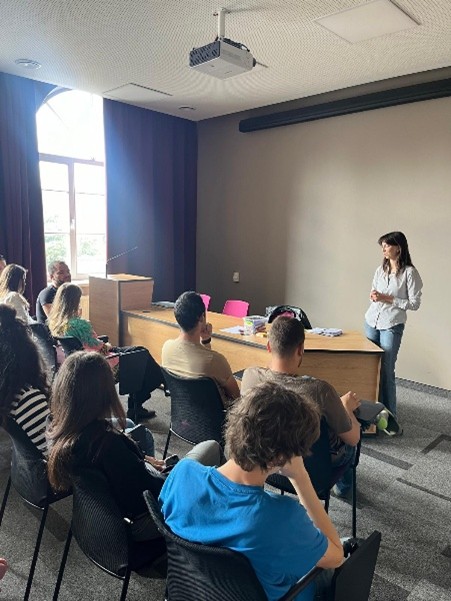
On 18 September 2025, a youth-focused environmental focus group in Kaunas, Lithuania brought together 14 participants aged 18-30 to discuss local sustainability challenges and co-create ideas for greener community action. The session was supported by two European Climate Pact Ambassadors, both actively engaged in promoting sustainable development through circular economy projects, zero-waste initiatives and environmental activism. Their experience provided valuable context and guidance, helping to connect local observations with broader climate goals.
Key environmental challenges identified in Kaunas
Participants highlighted several environmental issues currently affecting both their neighborhoods and the wider city:
- Insufficient organic waste collection: services vary significantly between districts, resulting in inconsistent access and low participation in proper food-waste sorting.
- Limited uptake of circular economy practices: many local businesses remain hesitant to adopt resource-efficient or waste-reducing measures.
- Low personal motivation and initiative: many individuals tend to wait for others – institutions, peers, or larger groups – to act first before they join sustainability efforts.
- General lack of support mechanisms: participants reported that motivation often decreases due to minimal encouragement or visibility from local decision-makers.
Existing initiatives and best practices discussed
Despite these challenges, the group recognized several ongoing community-driven and municipal initiatives that help raise environmental awareness:
- “Clearing up Kaunas” which is a volunteer-led clean-up actions targeting public spaces.
- “Darom” National Cleaning Day – a well-known annual event uniting residents across Lithuania.
- Community Urban Gardening Projects which are encouraging residents to reconnect with nature and local food production.
- Lithuania’s reverse vending machine system which is one of the country’s most successful and visible green initiatives, demonstrating how well-designed environmental policies can shape everyday habits.
These examples demonstrate that positive environmental momentum already exists, what’s needed is broader participation and continued visibility.
Participants brainstormed a range of practical, enjoyable and accessible green challenges that could be integrated into the next steps of the project. They emphasized simple habit-based actions, such as consistently bringing a tote bag when shopping, as an easy starting point for everyday sustainability. The idea of a “Sustainable Mobility Week” also emerged, encouraging people to choose cycling or public transport over car use. Participants expressed interest in organizing community clean-up actions more frequently to strengthen local stewardship, while eco-orientational walks were proposed as a way to combine outdoor exploration with environmental learning. Hands-on upcycling workshops were also highlighted for their potential to turn waste materials into creative and useful products. Altogether, these ideas aim to make sustainability approachable, social and personally engaging.
Next Steps: Strengthening Community Engagement
As a practical next step, participants expressed interest in organizing additional meetings and follow-up sessions. These gatherings would allow motivated individuals to continue discussing ideas, develop project concepts and test green challenges in real-life settings.
The focus group demonstrated that Kaunas has a motivated youth community ready to take action – what they need are tools, encouragement and continued collaboration to turn ideas into impact.